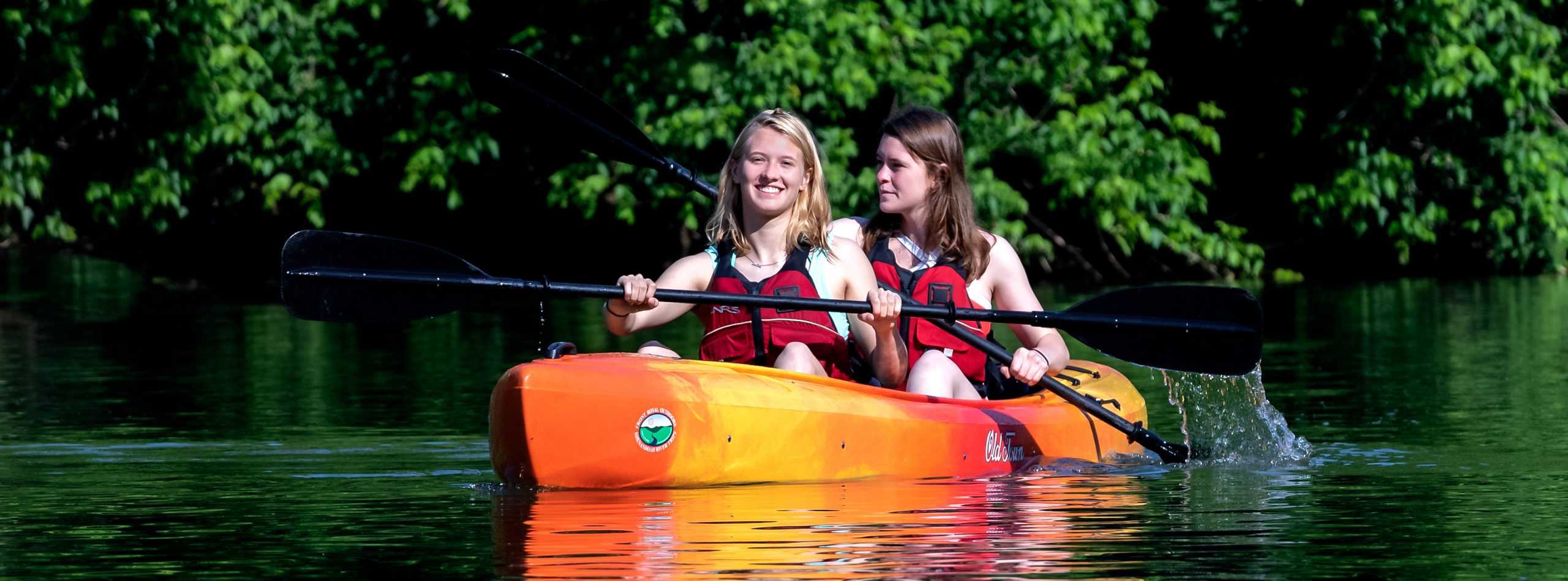

The Shenandoah River is one of the easiest big-river escapes on the East Coast. It’s clear, mostly gentle, framed by Shenandoah National Park on one side and Massanutten Mountain on the other, and it sits about 90 minutes from Washington, DC. Front Royal Outdoors has been putting people on this river since 1968, first as Front Royal Canoe Base and now from our riverside base on the South Fork just south of town. This guide to the Shenandoah River covers what the river is actually like, how calm (or not) it gets, what kinds of trips you can take, and how to plan one.
Quick Details on the Shenandoah River
- What is a Shenandoah River float trip? A self-guided trip where you drift and paddle downstream from an upstream landing back to a take-out. Outfitters like Front Royal Outdoors can supply the boat or tube, paddles, life vests, a river map, and the shuttle.
- Is the Shenandoah calm or whitewater? Mostly calm. The South Fork is Class I water with scattered Class II riffles and small ledges. It’s beginner and family friendly, not a big-whitewater river.
- What kinds of river trips can you do on the Shenandoah River? Tubing, kayaking, canoeing, rafting, stand-up paddleboarding, and fishing kayak trips. Front Royal Outdoors offers a variety of half day, full day, and multi-day trips too!
- Is it worth visiting? Yes, especially if you want an easy, scenic day on the water close to DC and Baltimore, or want to pair a river trip with Shenandoah National Park.
The Shenandoah River at a Glance
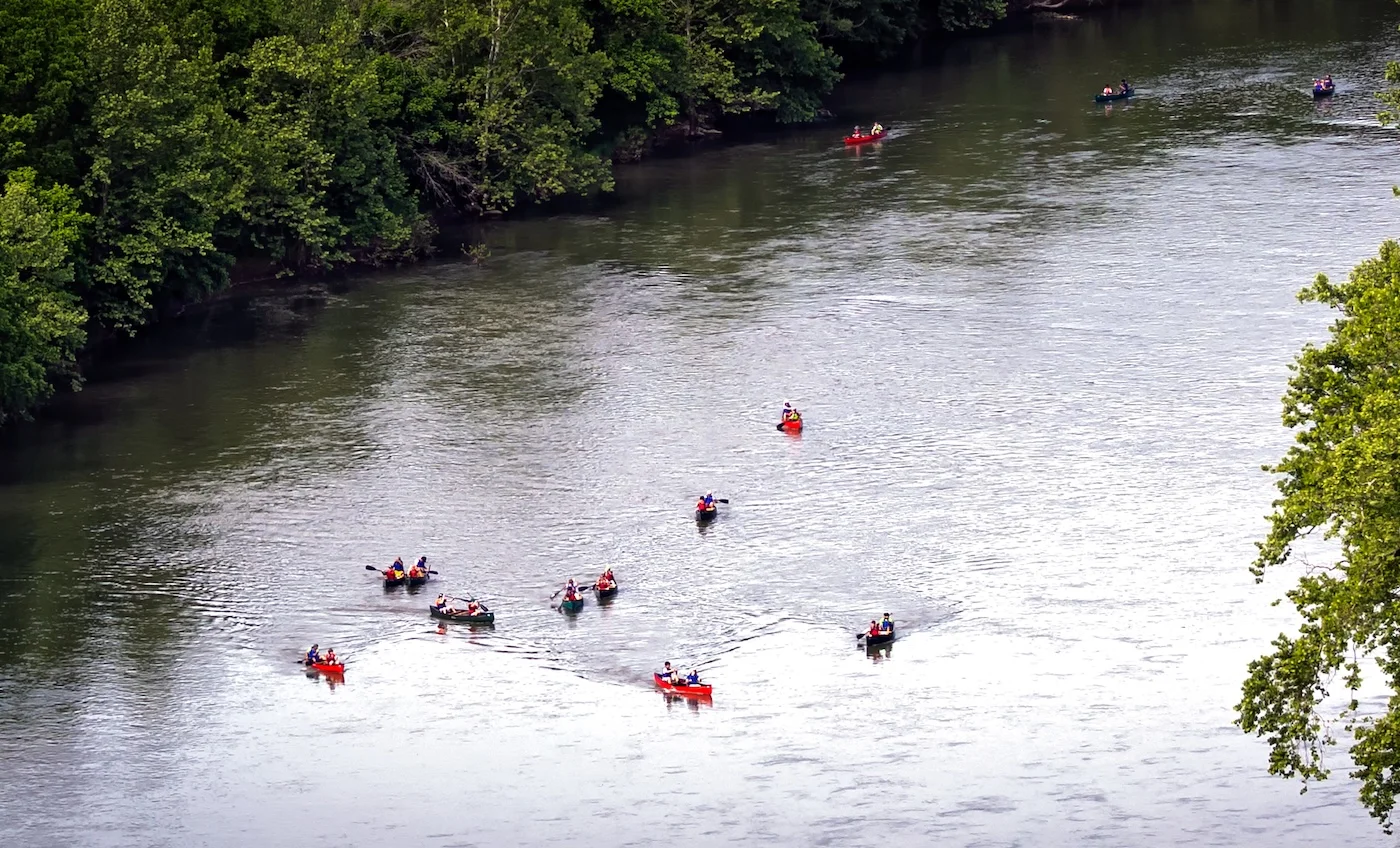
The Shenandoah is unusual in that it flows north. The South Fork begins near Port Republic and runs about 97 miles north to Front Royal, where it meets the North Fork and becomes the main stem of the Shenandoah. The main stem continues north into West Virginia and joins the Potomac at Harpers Ferry.
Front Royal Outdoors operates on the stretch of the South Fork between Luray and Front Royal. That section is marked with river mile markers from 0 (Luray) to 44 (Front Royal), which makes it easy to know where you are and how far you have left. It’s also why the river feels remote: Route 340 covers the distance between the two towns in roughly 25 miles, while the river takes 44 miles of switchbacks to get there.
A few things define this stretch:
- Clear water. On a normal day you can see the rocky, multicolored riverbed beneath your boat.
- Mountains on both sides. Shenandoah National Park and the Blue Ridge rise to the east, with Massanutten Mountain and the George Washington National Forest to the west.
- Wildlife. Great blue herons, bald eagles, and ospreys are regular sightings, along with turtles sunning on rocks.
- Fishing. The South Fork is known as one of Virginia’s best smallmouth bass rivers, which is why so many anglers book our fishing kayak trips.
- Islands and gravel bars. Plenty of spots to pull over, swim, and eat lunch.
Is the Shenandoah River Calm or Whitewater?
The short answer: the Shenandoah is a calm river with some fun, small rapids. On the South Fork stretch we run, the water is rated Class I with occasional Class II riffles and ledges.
Here’s what those ratings mean in practice:
- Class I: Moving water with small riffles and waves. Few obstacles, and they are easy to see and steer around.
- Class II: Straightforward rapids with wide, clear channels. You might get splashed and need a few paddle strokes to line up, but no advanced skills are required.
Most of a typical trip is moving flatwater broken up by riffles. The livelier spots are scattered along the route: the Class II rapids between Karo Landing and Front Royal give the popular half-day trips a little excitement, and Compton Rapid on the southern section (between Seekford Landing and Bentonville) is generally considered the most challenging rapid on the South Fork.
How water level changes the river
The river’s character depends heavily on the water level, which is why we post updated river conditions every day of the season:
- Normal levels: Gentle current, easy riffles, and every trip type available.
- Low water (common in late summer and fall): A slower float. You may scrape bottom in shallow areas, rafts tend to get stuck, and we recommend shorter trips and lighter boats like canoes and solo kayaks.
- High water (after heavy rain): Faster current, pushier rapids, muddy water, and floating debris. Some trips may be limited or unavailable until levels drop.
Always check our Shenandoah River conditions page before you book. It lists the gauge reading, water temperature, clarity, and which trips we recommend that day.
Looking for big whitewater?
If you’re after true whitewater rafting with large rapids, the South Fork isn’t that trip. The bigger Class II to III rapids on the Shenandoah are on the lower main stem near Harpers Ferry, about an hour north of Front Royal. The South Fork is the scenic, relaxed section of the river, which is exactly why it’s so popular with families, first-timers, and groups who want to float and hang out.
What Is a Shenandoah River Float Trip and What Should I Know Before Going on One?
A river float trip is a one-way trip downstream. Instead of paddling out and back, you start upstream and let the current carry you to a take-out point, paddling as much or as little as you like. An outfitter handles the logistics so you don’t need to own gear or shuttle cars.
Here’s how a float trip works with Front Royal Outdoors:
- Check in at our base. Arrive 30 minutes before your reservation at 8567 Stonewall Jackson Hwy, Front Royal, VA. Everyone signs a waiver (a parent or guardian signs for anyone under 18).
- Get your gear and briefing. Your rental includes your watercraft, paddles, life vests, a river map, and basic riverside instruction.
- Ride the shuttle upstream. Our drivers take you and your equipment to the put-in landing. Shuttle service is included with every trip.
- Float back. Many of our trips end right at our own landing, so you paddle straight back to your car.
What it actually feels like
On a summer tubing trip, you drift slowly enough to talk, swim, and soak your feet, with a few riffles to bounce through. Tubes move at the speed of the current, so our 3-mile tubing trip takes 3 to 4 hours. In a kayak or canoe, you cover the same 3 miles in 1 to 2 hours, or go much farther on a full-day trip. Either way, expect clear water, rocky shallows, shady banks, and long views of the Blue Ridge.
The trips are self-guided. There are no guides or lifeguards on the water, so you’re responsible for your group. That’s part of the appeal: you set your own pace and stop wherever you like.

What Kinds of River Trips Can You Do on the Shenandoah River?
You can build a Shenandoah trip three ways: by watercraft, by trip length, and by route.
By watercraft
- Tubing: The classic summer float. One person per tube, minimum age 5. Tubing is a warm-weather activity, and frequent floaters can save with a Tubing Season Pass.
- Kayaking: Solo or tandem (two people) kayaks. Minimum age 5. Solo kayaks are especially good when water levels are low.
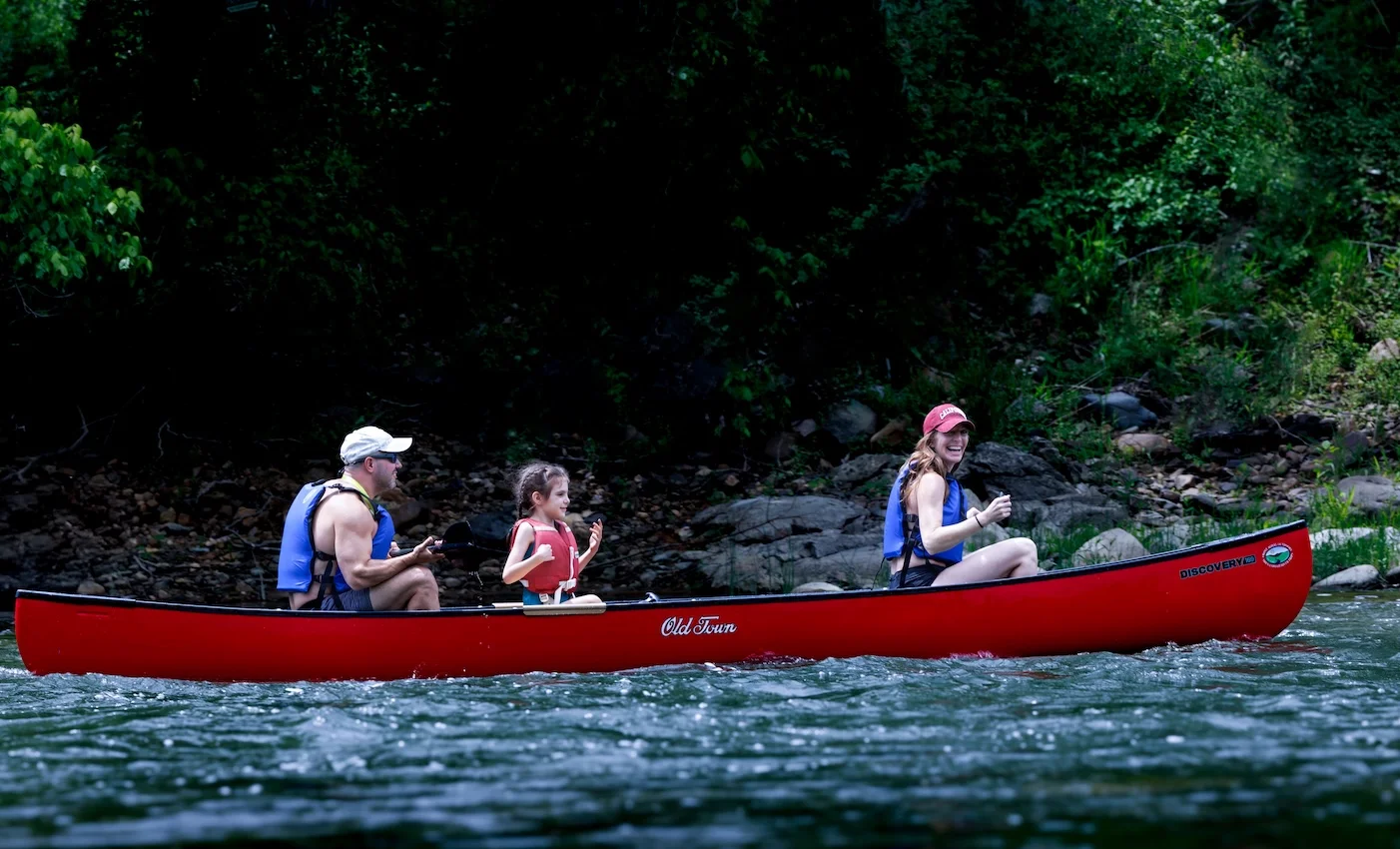
- Canoeing: Up to three people per canoe, with two recommended. Canoes carry gear well, which makes them the top pick for overnight trips.
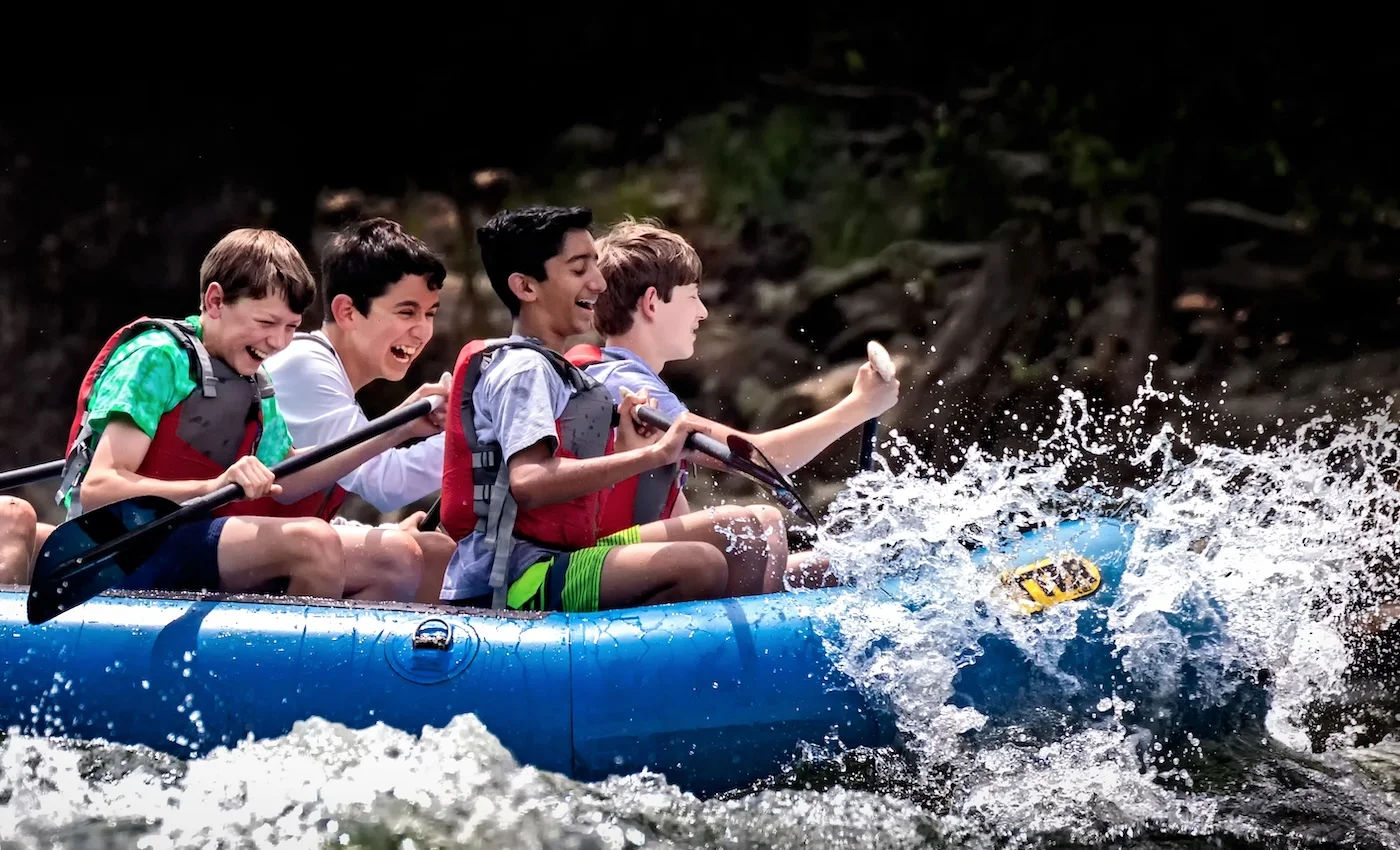
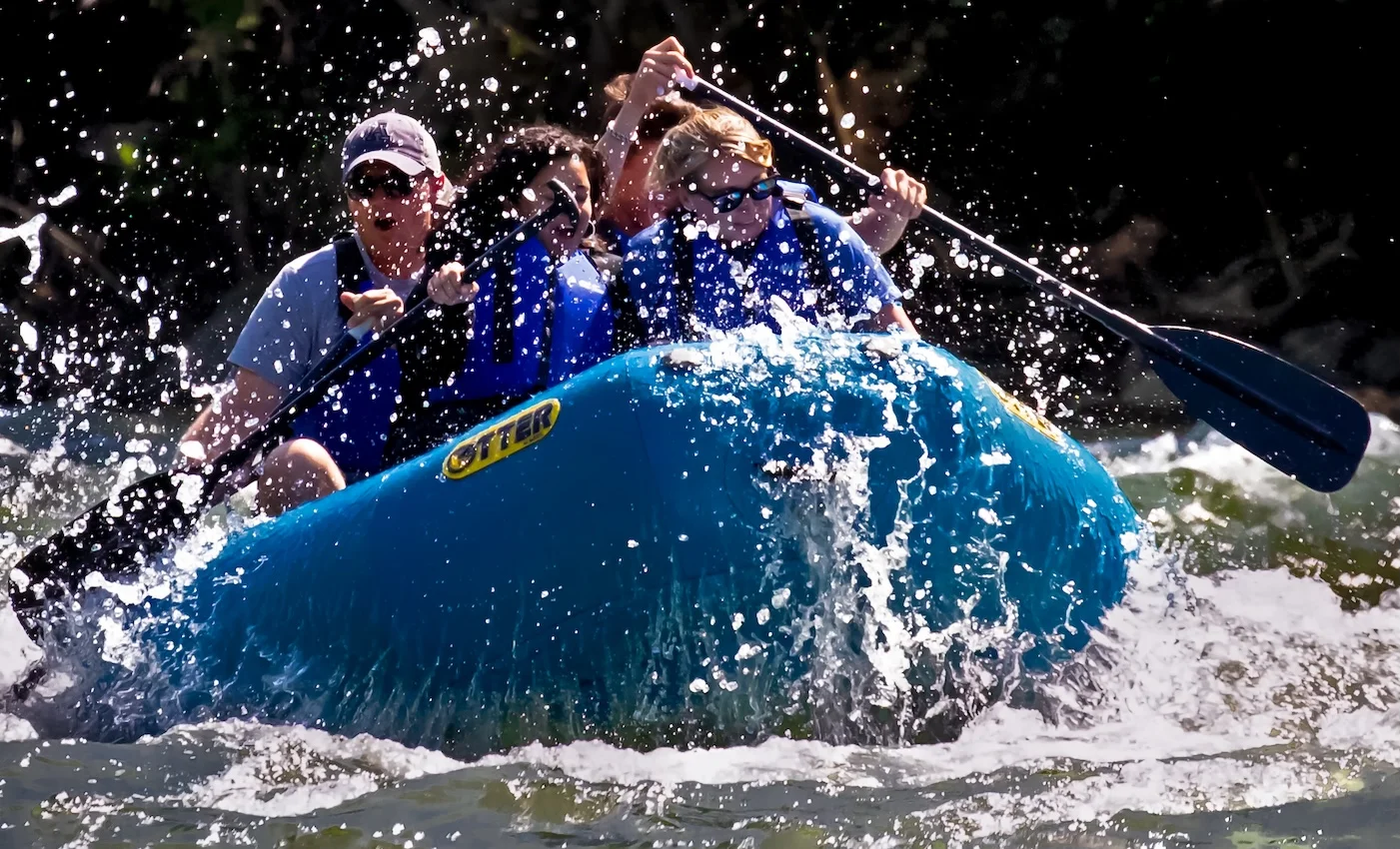
- Rafting: Self-guided 4-person and 6-person rafts. Rafts are very stable, which makes them a favorite for families with young kids. Minimum age 4, with at least two adults in the raft.
- Stand-up paddleboarding: Available on select routes. Minimum age 5, though we recommend 12 and up.
- Fishing kayaks: Built for anglers chasing smallmouth bass. Check our fishing report before you go.
By trip length
| Trip | Time | Distance | Route | Best for |
| Shenandoah River Tubing Adventure | 3 to 4 hours | 3 miles | Karo Landing to Front Royal Outdoors | Summer floats with friends and families |
| Half Day Trip #1 | 1 to 2 hours | 3 miles | Karo Landing to Front Royal Outdoors | First-timers, young kids, short on time |
| Half Day Trip #2 | 3 to 4 hours | 7 miles | Karo Landing to Front Royal Landing | A real paddle with a few rapids |
| Half Day State Park #2 | 2 to 3 hours | 5 miles | Shenandoah River State Park to Karo Landing | Scenic paddle past the state park |
| Half Day State Park #3 | 3 to 4 hours | 8 miles | Shenandoah River State Park to Front Royal Outdoors | Longer half day ending at our base |
| Full Day Trip #3 | 5 to 6 hours | 11.5 miles | Bentonville Landing to Front Royal Outdoors | A full day with lunch on a gravel bar |
| Full Day Trip #4 | 5 to 6 hours | 12 miles | Seekfords Landing to Bentonville Landing | Paddlers who want Compton Rapid |
| Full Day Trip #5 | 5 to 6 hours | 16 miles | Bentonville Landing to Front Royal Landing | Experienced, fit paddlers |
| Multi-day Trip #7 | 2 days | 23 miles | Seekford Landing to Front Royal Outdoors | First overnight river trip |
| Multi-day Trip #8 | 3 days | 40 miles | Bixler Bridge Landing to Front Royal Outdoors | The full Luray to Front Royal run |
More half-day, full-day, and multi-day routes (including additional state park and overnight options) are listed in our trip builder.
By route
Our trips run on two sections of the South Fork:
- The northern section (Bentonville to Front Royal, miles 28 to 44): This is our most popular area. It flows past Shenandoah River State Park, has excellent fishing, and many trips end right at our base, which keeps logistics simple.
- The southern section (Luray to Bentonville, miles 0 to 28): Longer, quieter stretches that make up most of our full-day and multi-day routes.
Download the section maps on our River Safety & Maps page.
Overnight trips and places to stay
Multi-day trips let you camp along the river and wake up on the water. If you’d rather sleep with a roof overhead, we also offer riverside cabins, glamping, and camping, which make a river trip easy to turn into a weekend.
Is the Shenandoah River Worth Visiting for a River Trip?
For most people planning an easy, scenic day on the water, yes. This guide to the Shenandoah River will answer why it’s worth the drive, and when it might not be the right fit.
Why it’s worth it:
- It’s close. Front Royal is roughly 90 minutes from Washington, DC and about two hours from Baltimore, depending on traffic. That makes a river day realistic without an overnight stay.
- It’s beginner friendly. Gentle Class I to II water means families, first-time paddlers, and mixed-ability groups can all enjoy the same trip.
- It pairs with Shenandoah National Park. Our base is about three miles past the Front Royal entrance to Skyline Drive, so it’s easy to hike or drive the park in the morning and float in the afternoon.
- You can tailor it. Six types of watercraft and trip lengths from one hour to three days mean you can match the trip to your group.
- It’s genuinely beautiful. Clear water, mountain views, eagles overhead, and islands to explore.
- Locals vouch for it. Front Royal Outdoors holds a 4.8-star rating from more than 1,300 Google reviews.
When it might not be the right fit:
- You want big whitewater. The South Fork is mellow by design.
- You want solitude on a summer Saturday. Peak-season weekends are busy. Weekdays and shoulder seasons are much quieter.
When to Go: Shenandoah River Seasons
Our river season runs from mid-March to early November.
- Spring (mid-March to May): Higher water and a quieter river. Great for longer paddling and multi-day trips. The water is cold early in the season, so dress in layers and bring a change of clothes in a dry bag.
- Summer (June to August): Peak season and prime tubing time. The water is warm, the days are long, and weekends fill up, so book ahead.
- Fall (September to early November): Fewer crowds, cooler air, clear water, and fall foliage along the banks. Levels often run low, so shorter trips are usually the best choice. Tubing typically wraps up for the season by early fall.
How to Plan and Book Your Shenandoah River Trip
Reservations
- Reservations are recommended, especially on weekends, but not required.
- Online reservations must be made at least 2 hours before you arrive. Phone reservations need to be made at least a day in advance at 800-270-8808.
- Book at least a week ahead for large groups and holiday weekends. Weekday trips usually don’t need a reservation, though large groups should still book. Ask about our group discounts.
Day-of Logistics
- Departures start at 9 AM on weekdays and 8 AM on weekends and run first come, first served. Arrive 30 minutes before your reservation, and make sure you arrive before the final shuttle for your trip.
- Parking at our base is for trip guests and is limited, so carpool when you can.
- Trips run rain or shine. Cancellations more than 72 hours out get a full refund, within 72 hours a 50% refund, and day-of cancellations aren’t refunded. If it’s raining here on the day of your trip, you can still go, call that day to reschedule, or take store credit.
Pricing
Tubing starts at $32 per tube, and Half Day Trip #1 starts at $41 per vessel. Prices are per watercraft, not per person, and don’t include Virginia sales tax. See current rates in the trip builder.
What to Bring
- Shoes that stay on in the water: water shoes, sneakers, or sandals with a heel strap. Flip-flops are not allowed.
- Plenty of drinking water and snacks.
- Sunscreen, a hat, and sunglasses with a strap. Sunburn is the most common injury on the river.
- A dry bag with a change of clothes and rain gear.
Leave the alcohol at home: it isn’t allowed on our trips, and it’s prohibited at public boat launches and state parks. Life vests are required by law on the Shenandoah. See our full what to bring list.
Which Shenandoah River Trip Is Right for You?
- Families with young kids: A raft or canoe on Half Day Trip #1, or the tubing adventure in summer.
- Friends looking for a laid-back summer day: The Shenandoah River Tubing Adventure.
- First-time paddlers who want a real trip: Half Day Trip #2 (7 miles) in kayaks or canoes.
- A full day on the water: Full Day Trip #3 from Bentonville, 11.5 miles back to our base.
- Anglers: Fishing kayaks on the Bentonville to Front Royal section.
- Adventurers: Multi-day Trip #7 for a first overnight, or Multi-day Trip #8 for the full 40 miles.
- National park visitors: Hike or drive Skyline Drive in the morning, then take a half-day float in the afternoon.
Shenandoah River FAQs
Is the Shenandoah River safe for beginners?
The South Fork Shenandoah River is mostly Class I water with some Class II riffles, and most of our guests have little or no paddling experience. Wear your life vest, check the river conditions, and avoid the river after heavy rain.
Do I need a river guide for the Shenandoah River?
No. Our trips are self-guided. You get a river map, a safety briefing, and shuttle service, and mile markers along the river help you track your progress.
How old do kids need to be to go on a river trip?
The minimum age is 4 in rafts (with at least two adults) and 5 for tubes, kayaks, canoes, and fishing kayaks. For paddleboards the minimum is 5, but we recommend 12 and up.
Can you swim in the Shenandoah River?
Many guests swim at gravel bars and calm spots along the way. Keep your life vest on and never try to stand up in swift water, where uneven, rocky bottoms can trap a foot.
How long does a Shenandoah River trip take?
Anywhere from 1 to 2 hours (Half Day Trip #1) to 5 to 6 hours for full-day trips, or 2 to 3 days for multi-day trips.
When is the best time to float the Shenandoah?
Summer is best for tubing and warm water. Spring is best for longer trips and higher water. Fall is best for foliage and smaller crowds, usually on shorter routes.
Can I bring my own boat?
Yes. You can use our landing for a small parking and landing fee, though weekend parking is limited to trip guests from Memorial Day to Labor Day. If you want to take our gear somewhere else, ask about our You Take It rentals.
Plan Your Shenandoah River Trip
The Shenandoah rewards almost any kind of visitor, from a family’s first float to a three-day canoe trip. Check the river conditions, pick your watercraft and route in our trip builder, or call us at 800-270-8808 and we’ll help you choose the right trip for the day.